

Meet the heart of USK9: Our mold detection dogs
Discover the unique abilities and dedicated training that make our K9 partners indispensable in identifying hidden mold. Learn about their personalities, their specialized skills, and why they are the best at what they do.

Meet Kibbi: USK9's mold detection specialist
Kibbi isn't just a working dog—she's a partner in helping families find answers when hidden mold is affecting their homes and health. With an extraordinary nose capable of detecting mold odors at extremely low concentrations, Kibbi searches areas that people and many traditional inspection methods can miss. Her job isn't to diagnose mold, but to identify locations that deserve closer investigation, helping make inspections more targeted and efficient. Dogs trained for mold detection are part of a specialized field that has grown from detection-dog programs developed for explosives, narcotics, and termites.

Kibbi's personality: Focused at work, affectionate at home
When she's working, Kibbi is highly focused and determined. She is calm and methodical, curious about every room she enters, and motivated by praise, toys, and doing her job well. Kibbi is confident in unfamiliar environments, making her an ideal partner for mold detection. When the work is finished, she's a completely different dog: loving, affectionate, playful, and full of personality.
How Kibbi became a mold detection expert
Kibbi wasn't born knowing how to find hidden mold—she was born with an incredible nose and the natural drive to hunt for a scent. Through months of specialized training, that instinct was carefully shaped into a highly accurate detection skill. Every dog begins by learning that finding a specific target odor leads to a reward. For Kibbi, locating the scent of mold meant earning her favorite toy, praise, or playtime. Over thousands of repetitions, she learned that only the target odor brings the reward.
Advanced training for real-world challenges
As her training progressed, the searches became more challenging. Hidden scent samples were placed behind walls, beneath cabinets, inside HVAC systems, crawl spaces, attics, and other difficult locations. Each successful find reinforced her confidence and precision. Kibbi also learned to work in real-world environments. Homes, offices, schools, healthcare facilities, and commercial buildings all present unique distractions, from pets and food, to unfamiliar noises and people. Kibbi's training ensures she can maintain focus and accuracy in any setting.
Why choose a mold detection dog?
Traditional mold inspections often rely on visual clues, moisture readings, or air and surface sampling. While these methods are valuable, they can miss hidden mold if the inspector doesn't know exactly where to look. A trained mold detection dog adds another level of precision.
Dogs find what you can't see
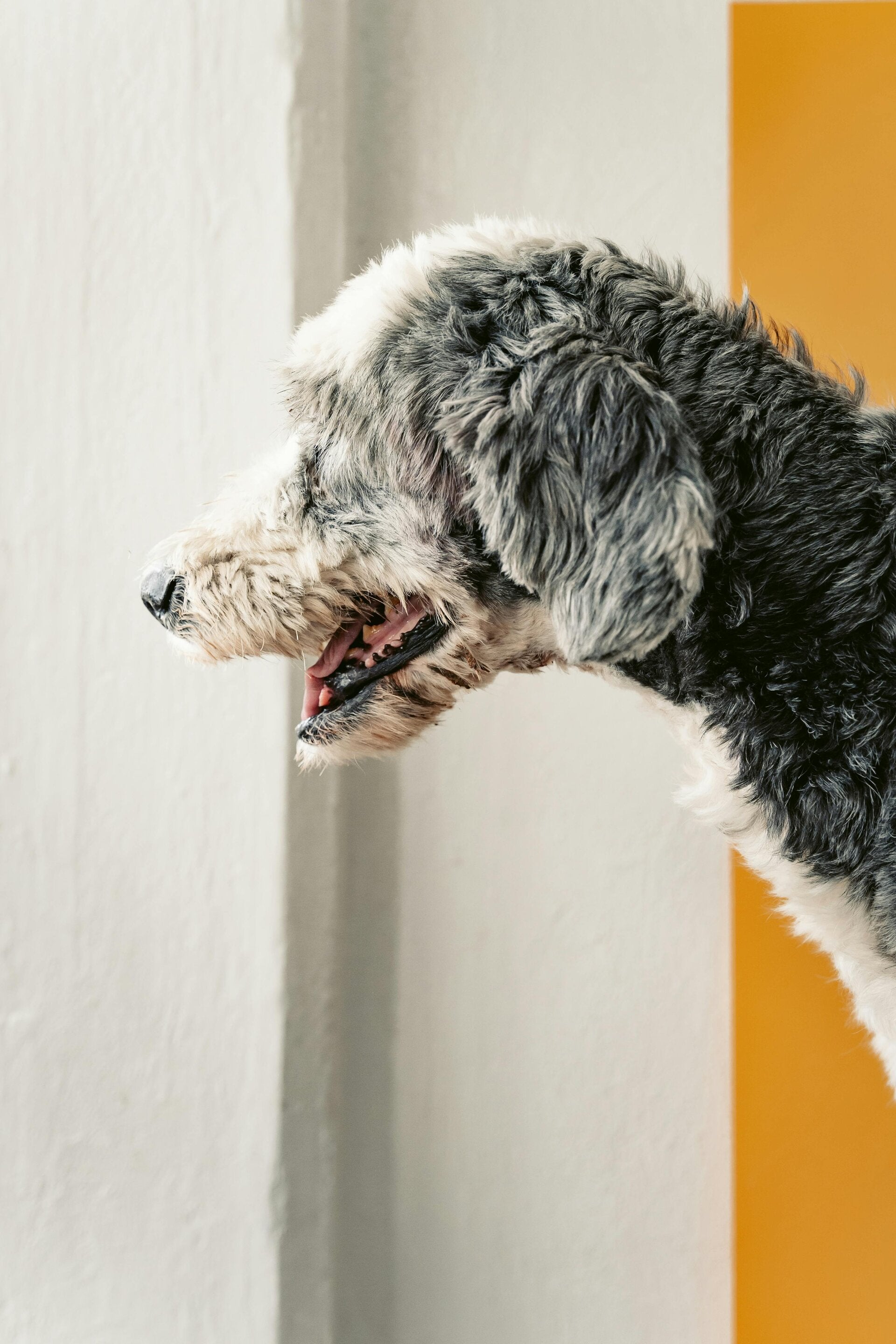
Mold often grows where it's hidden: behind drywall, under flooring, inside insulation, beneath cabinets, in crawl spaces and attics, around HVAC systems, and behind built-in fixtures. A trained detection dog uses scent—not sight—to locate the odor produced by mold growth, even when it's concealed behind building materials. This allows for more targeted and less destructive investigations.

Faster and less destructive results
Instead of spending hours searching room by room, a trained detection dog can often inspect an entire home in a fraction of the time. The dog quickly identifies areas of interest so the inspector knows where to focus further evaluation. Without a clear starting point, finding hidden mold may require extensive and destructive opening of walls. A dog’s precise alerts can minimize the scope of repairs, saving you time, money, and unnecessary disruption to your property.
A moment we'll never forget
Every working dog has that one day when you realize they're not just doing a job—they truly understand their purpose. One afternoon, Kibbi was inspecting a family's home after months of unanswered questions. There were no visible signs of mold, and previous inspections hadn't found anything that explained the persistent musty odor. Room by room, Kibbi searched with her usual focus. Then she suddenly stopped in front of what looked like an ordinary living room wall. She gave her trained alert and refused to move on.
To the family, it didn't make sense. There was no stain, no peeling paint, nothing unusual at all. Her handler trusted her and marked the location for further investigation. When the wall was later opened, hidden moisture and mold growth were found inside the wall cavity—completely invisible from the outside. The family finally had an answer. As everyone talked about what had been discovered, Kibbi was happily playing with her favorite toy, completely unaware of the profound impact she had just made.